We made a video to show a typical installation of a weldless sight glass kit but this is also a written step by step guide. Our advice is to watch the video and then read the instructions (or print them out and follow along during the install). The install instructions are slightly different for a keg vessel vs. a normal pot so please be aware of the differences noted. This also includes tips for threaded the thermometer into the combo kits as well as how to cut
INSTALLING the WLSL or WLST240 (compact weldless kits):
1. LOCATE the preferred center point for the sight glass bulkhead hole.
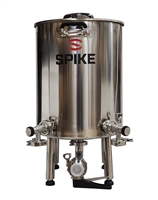
A. In a converted Sanke keg, the center point of the hole should be approximately 5/8” to 1" higher than the bottom skirt weld. However, the most foolproof way to determine the ideal place to drill the hole is to remove the bushing and washers from the tee or elbow fitting and hold the assembly in place against the keg. Slide it up and down looking for the spot that leaves the tubing mostly vertical, not leaning away from the keg wall or burying into it.
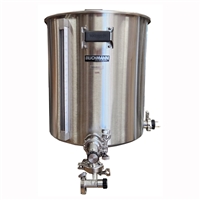
B. In a straight sided pot, make sure the interior washer will not rest against the bottom curvature of the pot. The whole assembly needs to be on a flat area of the side wall. In the case of the WLSL (sight only elbow kit), the lower the bulkhead is installed (within reason), the less liquid it will take to begin registering on the sight glass. In the case of the WLST240 (combo sight/thermo kit), you may want to move the hole up higher so that the 2" dial face of the thermometer will not prevent the pot from sitting flat on a table top. An easy way to accomodate this is to hold the dial face against the pot, elevated off the bottom surface about 1/2", and marking the circle. The centerpoint of that circle is now the centerpoint of the 9/16" hole you will drill.
2. Drill a clean 9/16" diameter hole in the sidewall of your metal vessel, preferably with a step or “uni” bit. Tip: Start any hole with a small 1/8" pilot hole as most larger bits are not great at getting the initial hole through the metal. Deburr any sharp edges from the hole by either running the step bit from the inside or by using a metal file or sand paper. Be extremely careful working on the drilled hole until the sharp edges are smoothed out.
3.Unscrew the threaded bushing from the elbow/tee fitting and remove the silicone gasket.
4.Leave the metal washer(s) on the bushing and insert it through the hole in the vessel from the inside.
5.Push the red silicone washer over the threads on the outside of the vessel all the way tight to the sidewall.
6.Hold the tee fitting (or elbow) and tube in front of the threads and turn the bushing from the inside to thread it in. The silicone washer should crush slightly between the fitting and the vessel wall but do NOT over tighten. It is better to undertighten and adjust a bit tighter later if it leaks. Note that the silicone gasket should be the only thing between the fitting and the outside wall of your vessel. You should NOT use teflon tape or any other type of thread sealant on the threads of the weldless bushing. The seal is made with the gasket.
7. Make the tube straight up and down (plumb) and mark a spot to drill the 1/4" hole at the very top of the vessel for the eyebolt. Leave one nut on the eyebolt threads, slip the loop over the top of the sightgass tubing, insert the eyebolt threads into your 1/4" hole, and thread the second nut onto the threads from the interior of the vessel. The distance the tubing is held from the vessel can be adjusted before tightening everything up. On a straight pot, be sure to locate the hole as high as you can without the interior nut interfearing with an inset style lid. On a keg, you can locate the hole at about the middle of the top skirt avoiding the rolled edge at the very top.
Tip: Take the time to make sure the tube is straight. I know you're anxious to get the job done but if you eyeball it badly, you'll regret it every time you brew and see a crooked tube.
8. For the Thermo. combo kit, see instructions for installing the Thermometer below.
CALIBRATION INSTRUCTIONS for all kit types:
1. Level the vessel, apply a vertical piece of masking tape to the side of the tube, and add a carefully measure gallon of water at a time noting each gallon on the tape. Empty the vessel and remove the sight glass. Cut the number strip into individual numbers, remove the rigid paper off the number, apply at the correct level on the tube. Remove the vinyl backing. (It's probably better to view the video to get this).
2. If you make a mistake applying the vinyl numbers, you should be able to scrape them off with your fingernail without damaging the tubing. However, do NOT use any solvents or adhesive removers except for rubbing alcohol on a paper towel and some elbow grease.
LENGTH TRIMMING INSTRUCTIONS for all kit types:
If after initial installation you find the tubing is sticking up past the top of the vessel, you may want to trim it flush to make it look better and avoid snagging.
1. Mark the cut line with a sharpie marker or piece of tape. WARNING, if you are using tape to mark the cut line, be sure to note which edge represents the cut line or you make cut the tubing short by whatever the thickness of the tape is.
2. Remove the kit from the vessel, laying the tubing down on a piece of cloth to avoid scratching, and cut the tubing with a hack saw or other fine-toothed trim saw. You can also use a tubing cutter designed for copper pipe to make a score cut around the tubing and then snapping it. In either case, you can clean up the cut edge with a piece of sandpaper wrapped around a block of wood.
THERMOMETER INSTALLATION INSTRUCTIONS for Sight Thermo Combo kits (WLST240 and WLLTS240):
1. Apply about three layers of teflon tape to the end of the threads of the thermometer clockwise if the dial is facing away from you.
2. Thread it into the end of the tee fitting by hand until it gets snug, then switch to an adjustable or box wrench on the hex of the thermometer (it is not recommended to use pliers or pipe wrench with "teeth"). Since you'd like to have the thermometer's face remain upright for asthetic reasons, try to anticipate when the threads will become too tight to turn for another bit of rotation. We've found that once 1/2" NPT threads become too tight to turn by hand that you will get about one more full rotation more with a wrench. With appropriate application of teflon tape, the thermometer does not have to be tighted to maximum wrench torque in order to be leak free. This is a low pressure connection.
3. If you find that the thermometer is not upright when you've reached a "tight enough" state, decide wether the face will become upright with a small amount of clockwise rotation. If so, try getting it upright with the wrench. You will be able to apply much more torque by removing the kit from the vessel temporarily and holding the tee fitting with a pipe wrench or even holding it down on a flat surface and placing your knee on the fitting. Please don't overdo it. If you can't quite get the face upright, it's best to back off, remove the thermo, reapply the teflon tape and reinstalling STOPPING at the upright location that is a little looser.
Bobby thanks for an amazing product and instructional video. my sight glass turned out perfect. http://i5.photobucket.com/albums/y171/flomaster/Home%20Brewing/IMG_20110131_204636.jpg
Bobby, Why am i drilling a 9/16" hole for a 1/2" fitting?
Arthur, sorry I missed this earlier. The 9/16" hole is for the compact kits that use 1/4" NPT hardware. 1/4" NPT is just over 1/2" actual OD. If you are installing the larger LTS kit, it uses 1/2" NPT which requires a 13/16 or up to 7/8" hole. I updated the instructions above to deal with the LTS kits which are a newer offering here.
I am assuming that when calibrating the BK all false bottoms, hop stoppers, dip tubes, whirlpool returns are attached so as to accurately record the displacement they cause. Let me know if that sounds crazy.
Technically you're correct but in the grand scheme, it's probably not going to displace much.
Bobby, I have been watching your videos for years and your knowledge has saved me time, money and mistakes. I thank you for that. I bought the sight tube set up, and have not installed it yet. But I can see it will be a great addition to my growing beer hobby. Boil off was always an issue now I can tune it in, besides guesstimating on the keg ribs. Thanks . Keep up the good work.
Hi just installed the thermometer sightglass combo in about 30 minutes, taking my slow but accurate time. Assembly and calibration was very easy and the video made it a no-brainer! Thanks for the great sale fast shipping and user-friendly instructions! Now I can't wait to see how much easier it'll make my strike and sparge water preparation
I just installed mine, great product, easy to install with the provided instructions. I would add one thing, put some serious thought into where you'll be standing when you read the sight glass, and pay careful attention to the directions the arrows point on the vinyl stickers. I ended up having to cut out each individual arrow because I wanted them oriented opposite how they came on the sticker sheet. This is 100% my issue, the product is perfect as is, but be sure to put some thought into it before starting. Thanks again for the great product!
I am very new to this but, when calibrating, do you drain the keg completely or do you start the calibration at the point where the water stops draining out. I'm assuming that the keg doesn't drain completely. Thanks
Need some advice. Received this product, but the hole in my keggle seems larger than the 9/16 hole - the entire external fitting goes through the hole. Do I need a different product or can I fix this with washers? Thanks!
Paul, I assume the hole was there earlier? If the fitting slide through, you probably have a 7/8" hole meant for 1/2" NPT fittings. The larger WLLTS240 kit would work directly in the hole is in fact 7/8".
Please keep comments relevant to the product and avoid profanity. I have to approve comments to avoid spam but I will not censor real customer criticisms.
Comments
http://i5.photobucket.com/albums/y171/flomaster/Home%20Brewing/IMG_20110131_204636.jpg
Why am i drilling a 9/16" hole for a 1/2" fitting?
Arthur, sorry I missed this earlier. The 9/16" hole is for the compact kits that use 1/4" NPT hardware. 1/4" NPT is just over 1/2" actual OD. If you are installing the larger LTS kit, it uses 1/2" NPT which requires a 13/16 or up to 7/8" hole. I updated the instructions above to deal with the LTS kits which are a newer offering here.
I am assuming that when calibrating the BK all false bottoms, hop stoppers, dip tubes, whirlpool returns are attached so as to accurately record the displacement they cause. Let me know if that sounds crazy.
Technically you're correct but in the grand scheme, it's probably not going to displace much.
Paul, I assume the hole was there earlier? If the fitting slide through, you probably have a 7/8" hole meant for 1/2" NPT fittings. The larger WLLTS240 kit would work directly in the hole is in fact 7/8".
RSS feed for comments to this post